Grade 9 Biology Unit 6 : Ecology
About Course
Unit 6 of your Grade 9 Biology course is called “Ecology.” In this unit, you will explore the relationships between living things and their environment—how plants, animals, and microbes interact with water, air, light, and each other.
First, Chapter 6.1 introduces ecology and explains key terms like “habitat,” “niche,” and “ecosystem.” You’ll learn how ecologists study nature using observation and measurement, both in the lab and in the field.
In Chapter 6.1.2, you’ll dive into biotic (living) and abiotic (non-living) components of the environment. You’ll understand how light, temperature, water, nutrients, and wind shape the life around us—and how predators, herbivores, and pollinators influence where species live. You’ll also learn to identify these factors in your local surroundings.
Chapter 6.1.3 explains ecological levels—from a single organism to the population, the community, the ecosystem, and finally, the biosphere. In Chapter 6.1.4, you’ll study ecosystems like forests and lakes, learning how energy and nutrients flow through producers, consumers, and decomposers.
In Chapter 6.1.5, you’ll explore biomes, which are large areas of Earth with similar climate, plants, and animals. You’ll study the deserts, forests, grasslands, tundras, and aquatic biomes like lakes and rivers. You’ll also examine the plants and animals of each biome and see how Ethiopian environments fit into these global patterns.
Chapter 6.1.6 introduces ecological succession, showing how life returns after disasters like volcanic eruptions or forest fires. You’ll learn the difference between primary and secondary succession and how pioneer species help build new ecosystems.
Finally, Chapter 6.2 covers ecological relationships—how species compete, prey, parasitize, or help each other. You’ll understand interactions like mutualism, predation, herbivory, and commensalism, and see how they affect life in Ethiopia and around the world.
By the end of Unit 6, you’ll be able to describe ecosystems, explain how living things interact with their environment, name major biomes, and understand how species affect each other through competition and cooperation.
To help you reach these goals, the course offers you clear definitions, practical examples, easy activities, field observations, and national-exam-style questions. These tools will prepare you to think like an ecologist and succeed in your studies.
Course Content
Textbooks
-
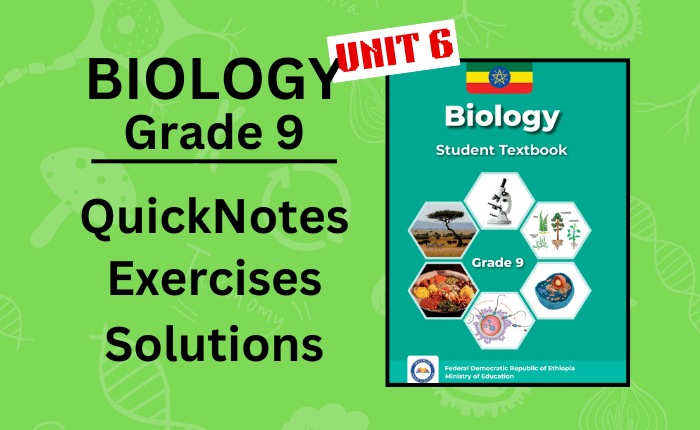
Official Textbook – Grade 9 Biology Unit 6 : Ecology
Exercises
Student Ratings & Reviews